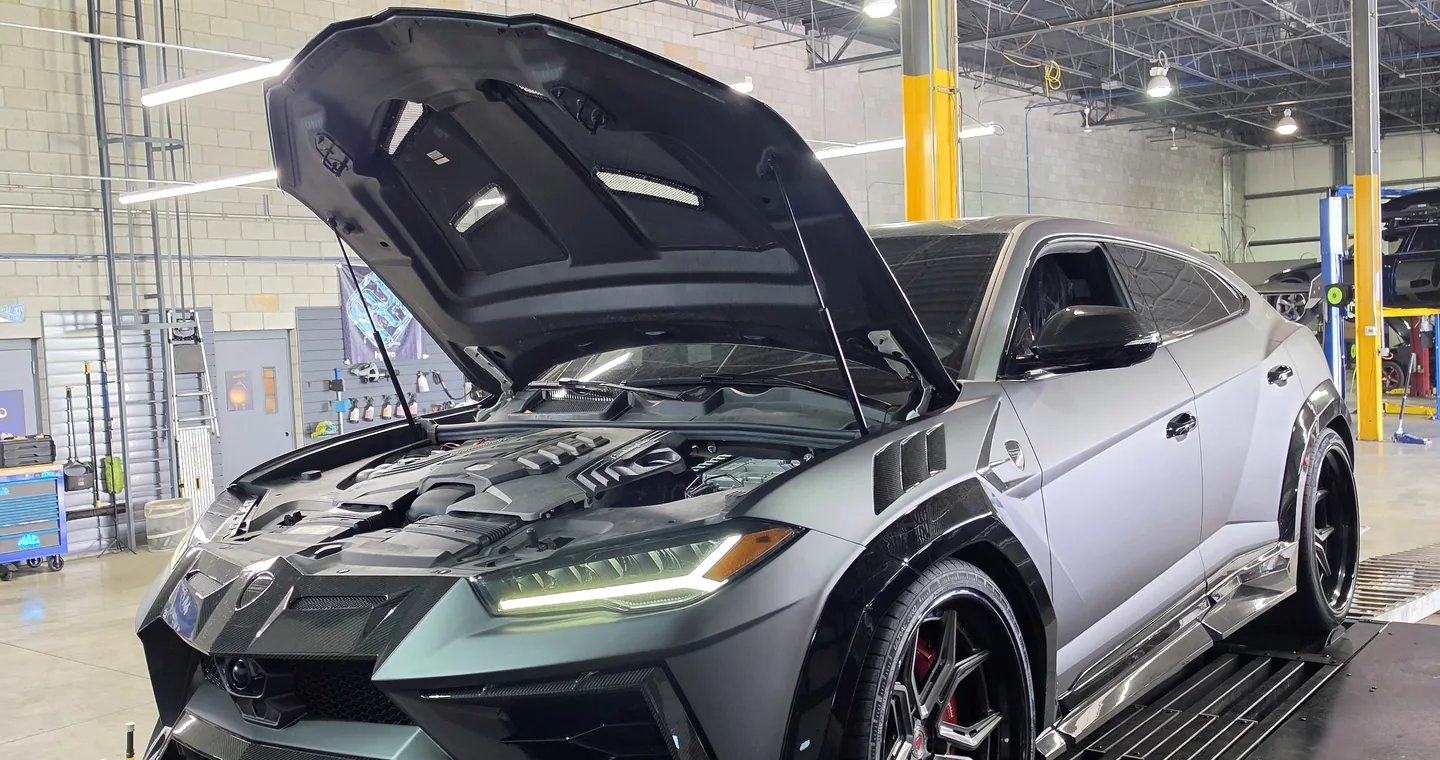
What dyno testing is useful for
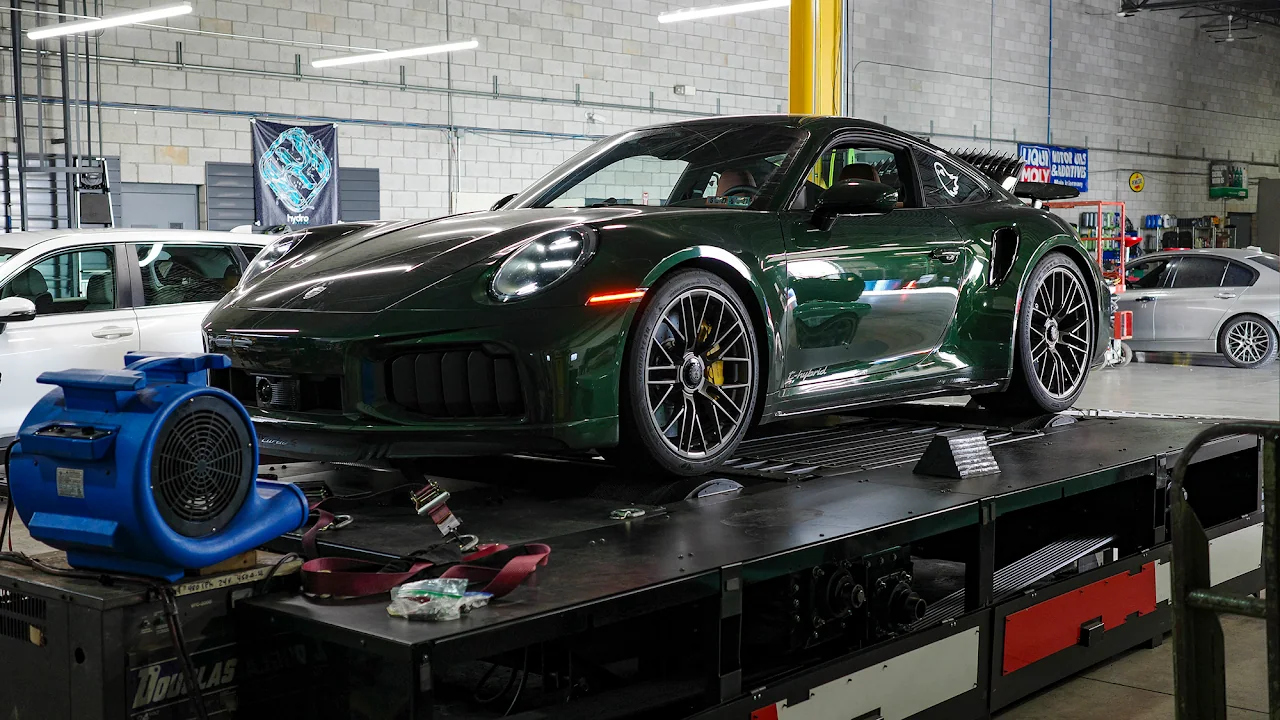
A dyno session can establish a repeatable baseline, compare a before-and-after change, confirm a repair under load, or reproduce a drivability concern that is difficult to evaluate at idle. We decide what data matters before the pull instead of treating every visit like a peak-power contest.
Baseline and post-work validation
A baseline helps you understand where the vehicle starts. Post-repair or post-upgrade testing helps confirm whether the work made the expected change and whether the vehicle behaves properly under load.
- Baseline pulls before performance work.
- Post-repair or post-upgrade validation.
- Measured results for drivability and performance discussions.
What to send before scheduling
Include the vehicle year, make, model, drivetrain, current modifications, fuel, tire condition, warning lights, and what you want to learn. Tell us about leaks, misfires, overheating, drivetrain noises, or recent repairs before the car reaches the dyno.
A graph is only useful with context
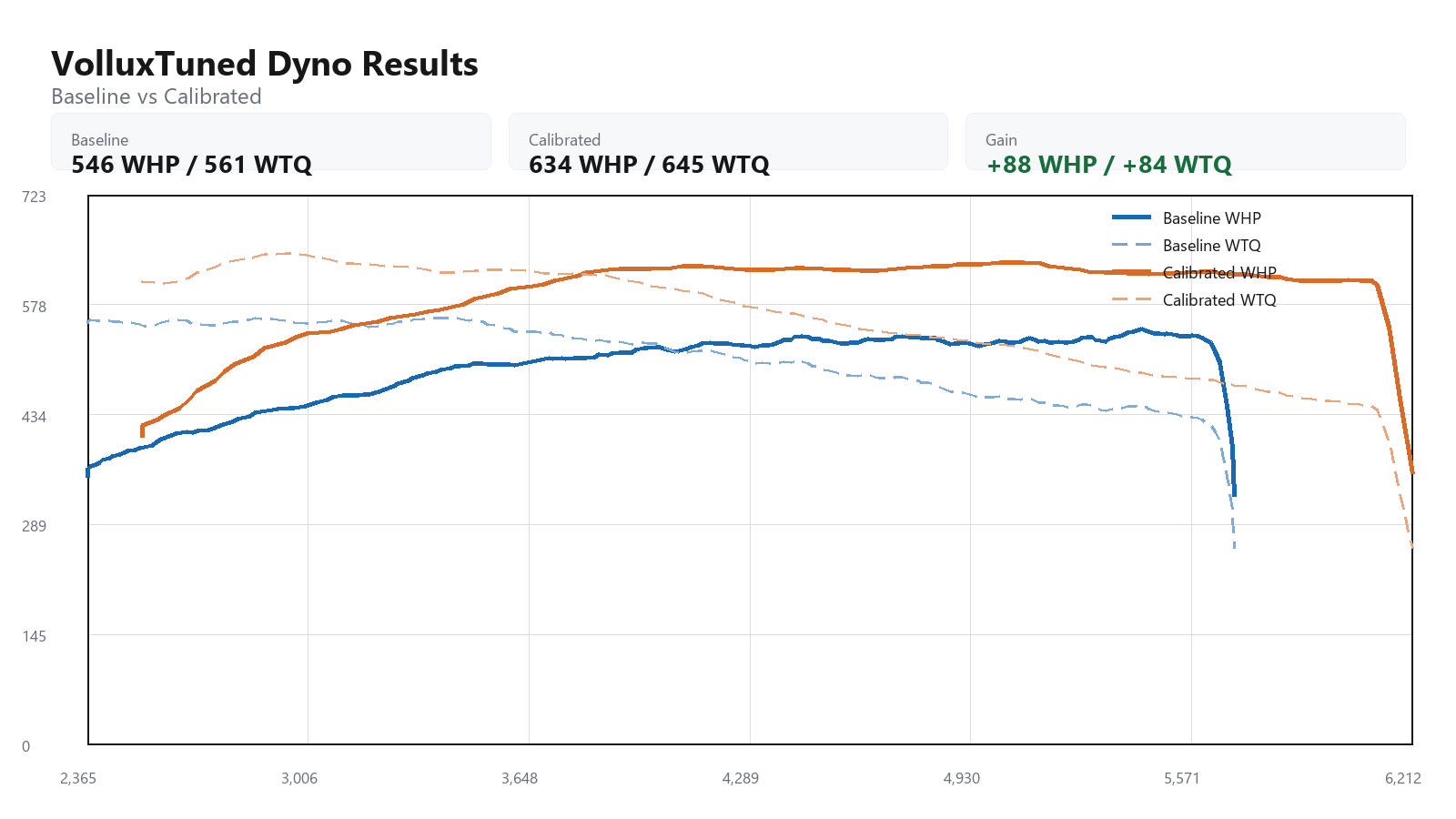
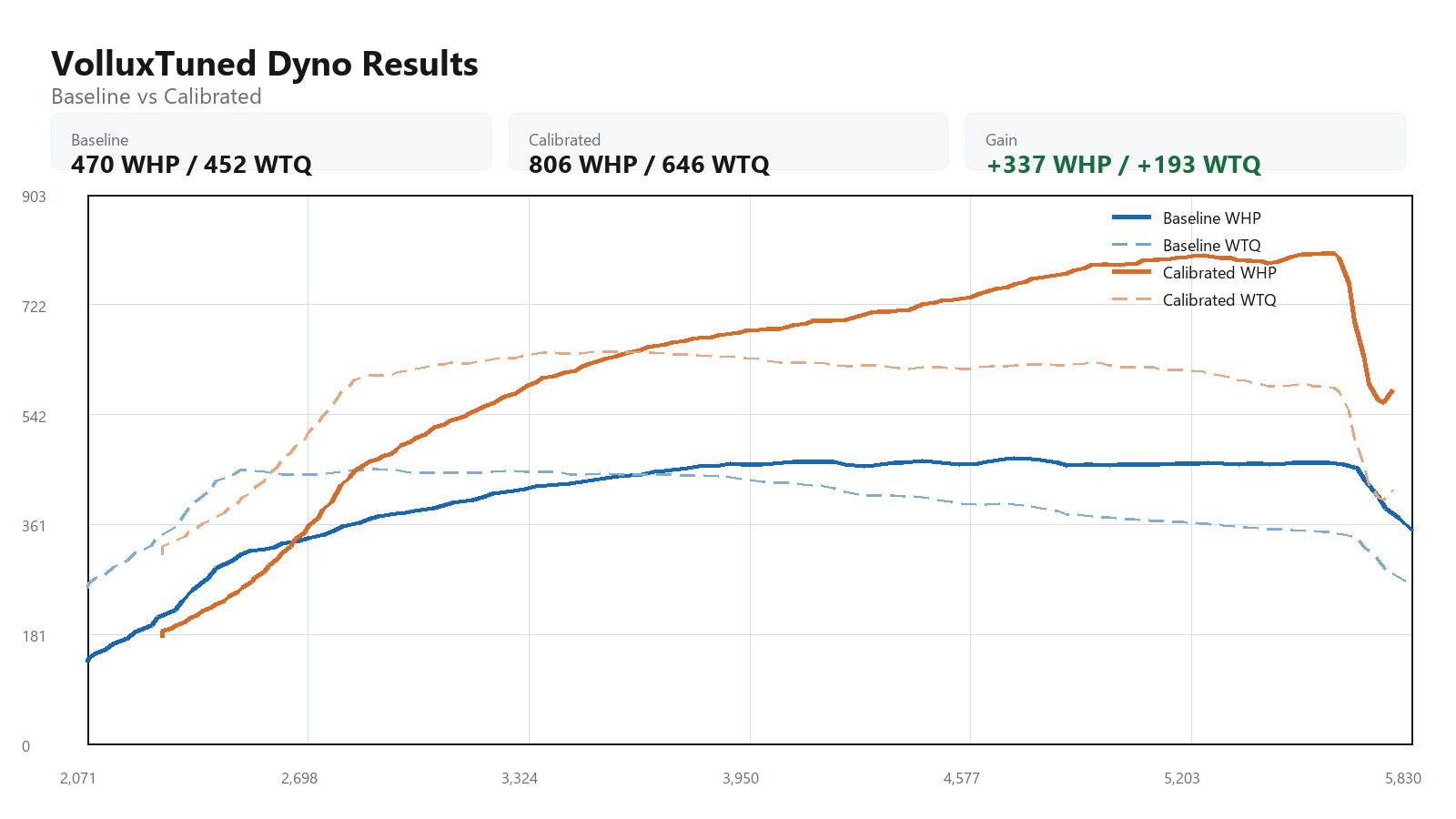
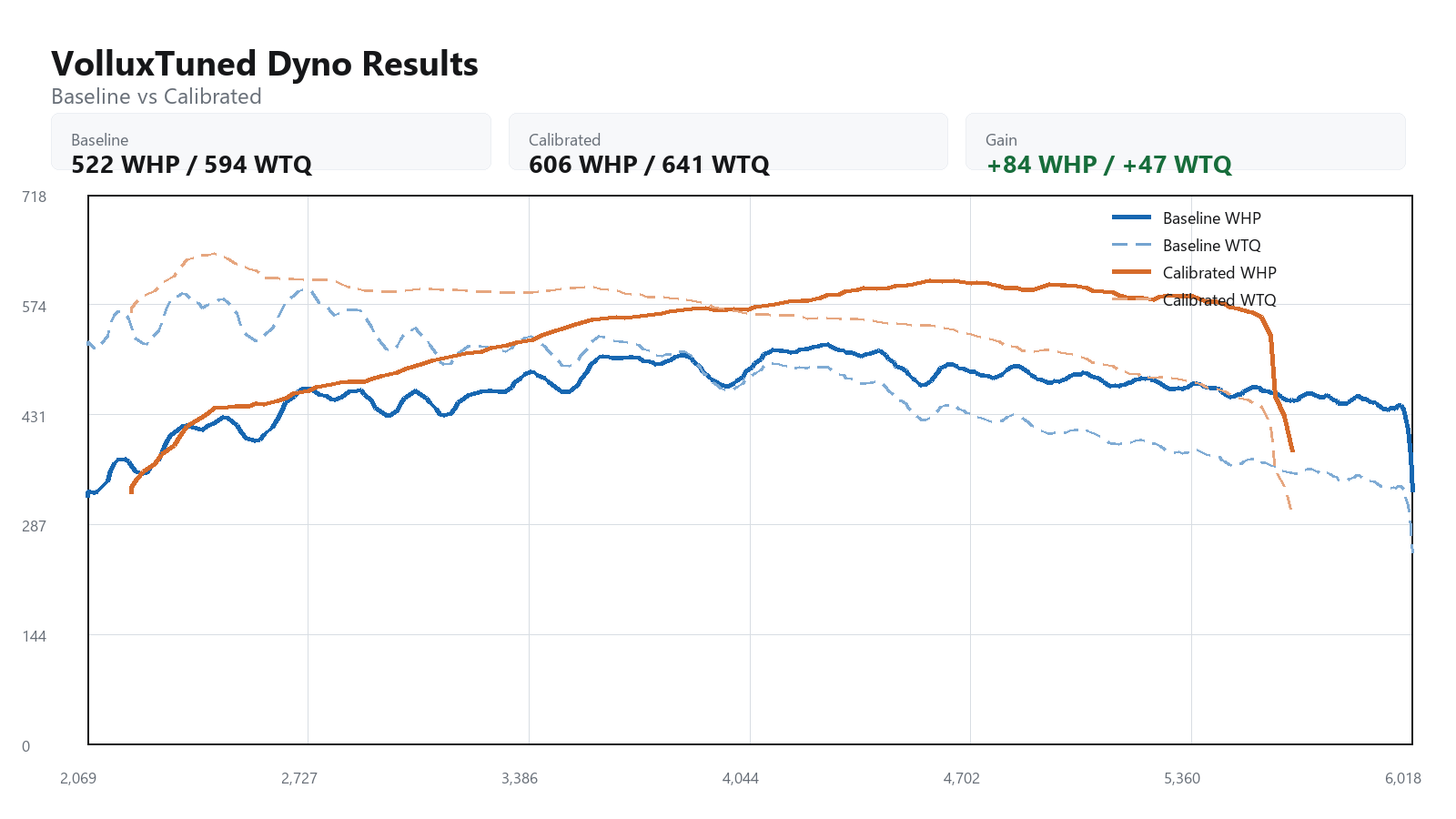
Peak WHP and WTQ do not tell the entire story. Curve shape, repeatability, heat, tire behavior, fault data, and the condition of the vehicle all affect what a result means. The public result library shows specific examples rather than promising that every similar car will repeat them.