Choose the tuning path that fits how you use the car
Some owners want the control and features of MHD, bootmod3, or HP Tuners. Others want a custom tune without paying for a separate platform license. Vollux supports both approaches where available and explains the tradeoffs before you buy software.
The setup—not the badge—determines the tune
Year, model, ECU software, transmission, hardware, fuel, intended use, and desired features all matter. We use those details to determine controller access, the calibration path, supporting work, and whether baseline or final dyno testing belongs in the scope.
- Stock or lightly modified street vehicles.
- Hardware-matched calibration for turbo, intake, exhaust, fueling, or other changes.
- Flex-fuel, map switching, or platform features where the exact application supports them.
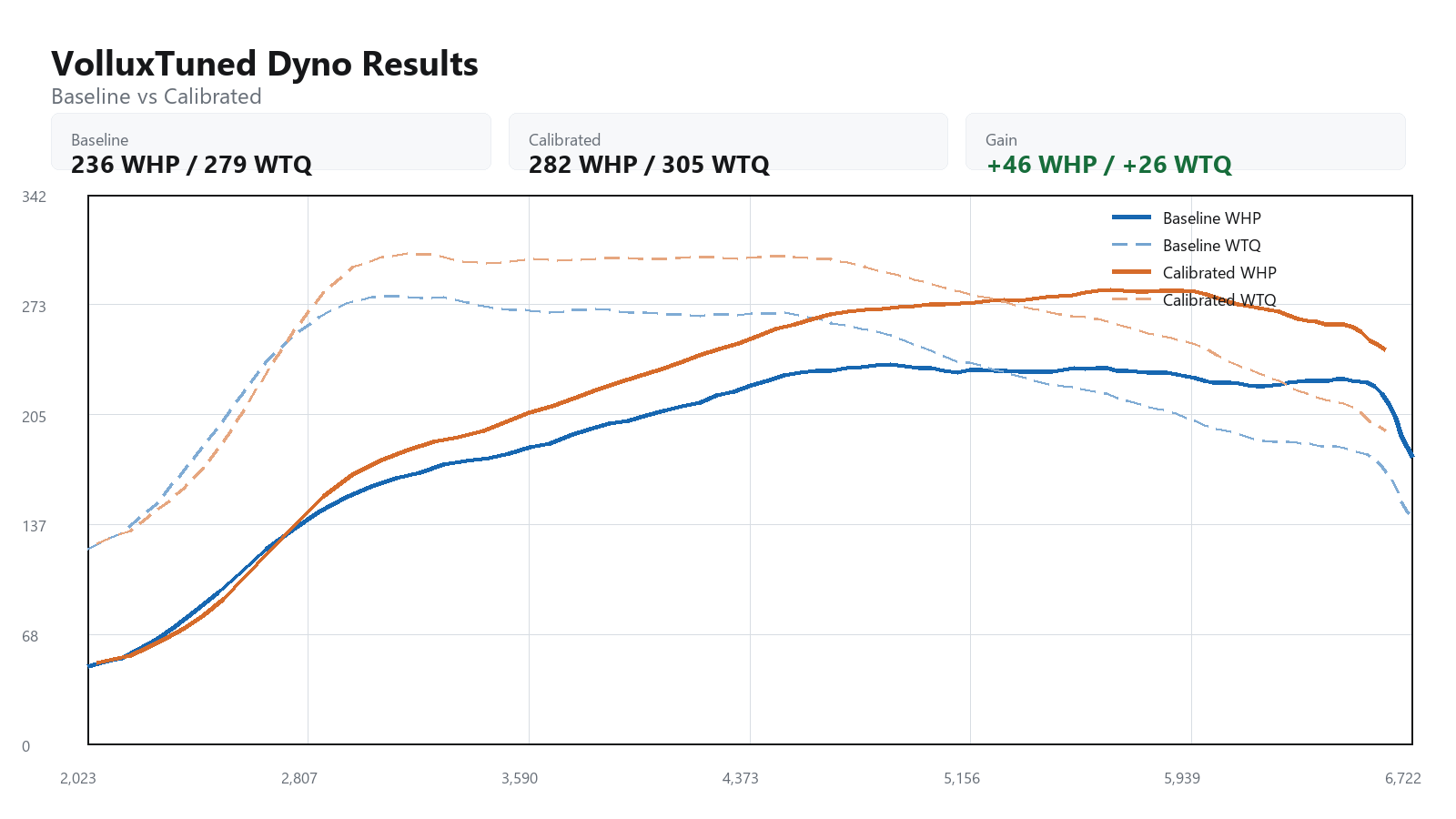
Custom dyno tuning with measured proof
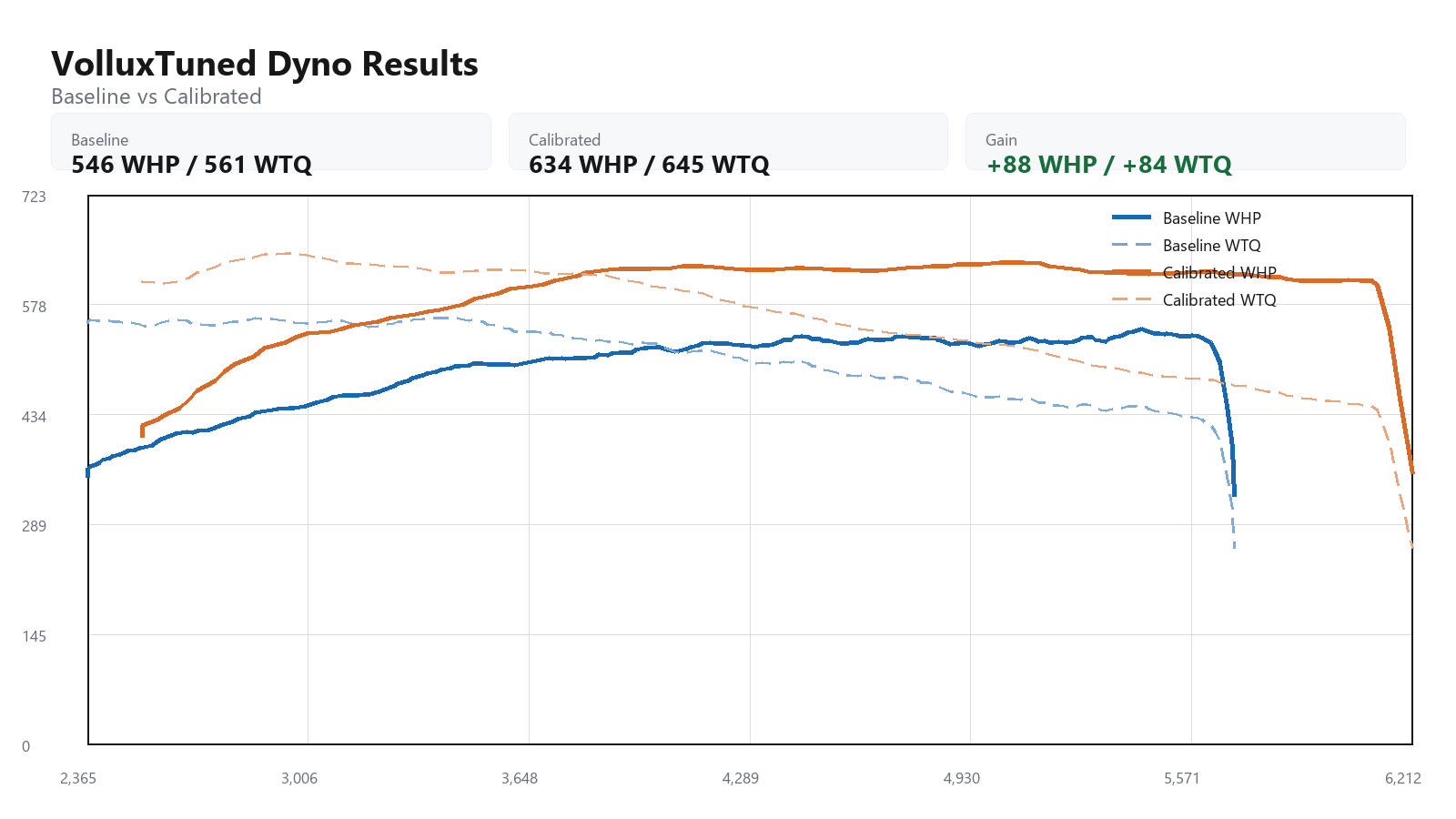
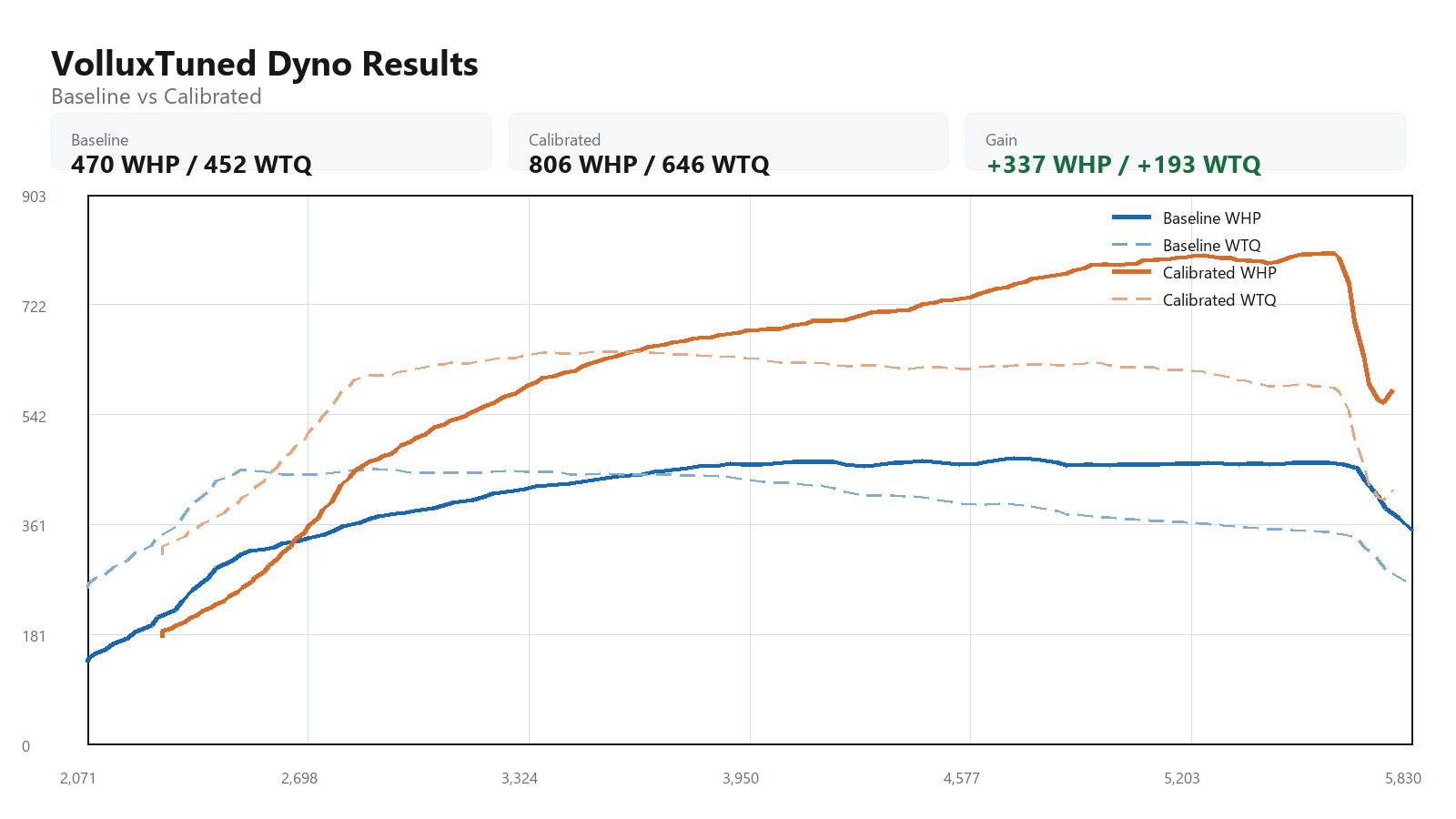
The in-house AWD Dynojet lets us establish a baseline, make controlled calibration changes, and review the complete curve under load. Peak power matters, but so do repeatability, fueling, boost or load control, heat, torque delivery, and drivability.
Unlocking and calibration can stay in one shop
If the ECU must be unlocked first, Vollux can handle many supported BMW, MINI, Dodge, GM, Volkswagen, and Audi access steps in-house. DME9, Lotus Emira V6, and other specialty applications may use a confirmed ship-out path.
The car must be ready to tune
Calibration cannot repair a weak ignition system, boost leak, fuel-delivery problem, mechanical wear, or neglected maintenance. Existing faults and concerns are reviewed before tuning, and the shop can help address the work needed to make the vehicle ready.