Oil leaks need source confirmation
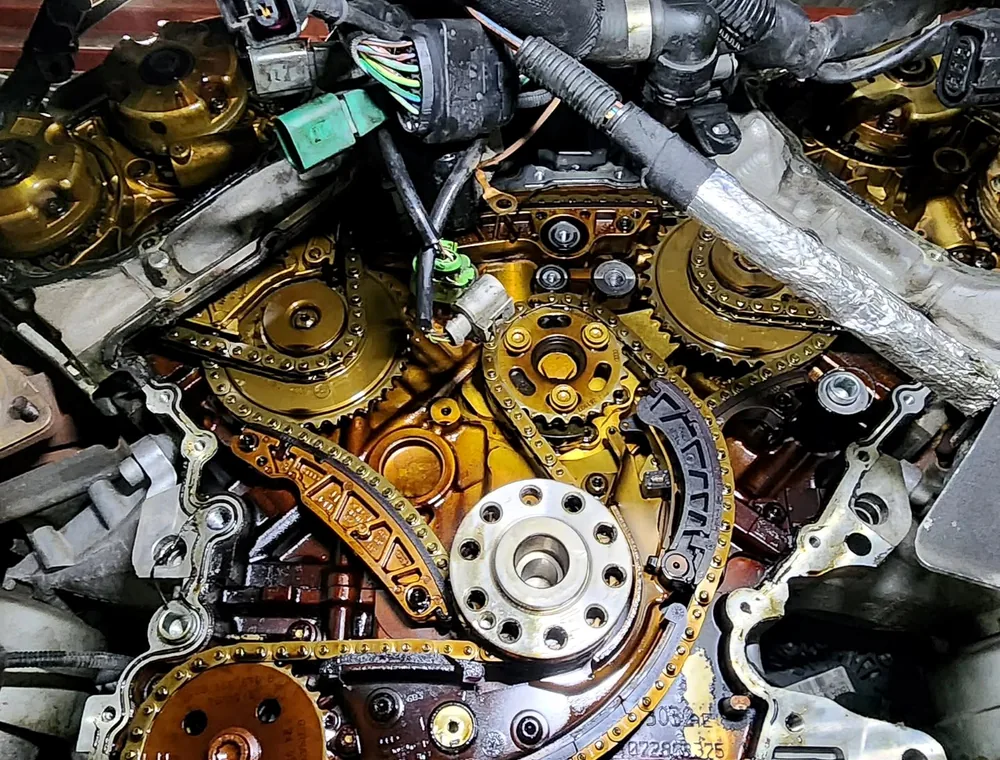
Oil can travel across covers, brackets, lines, subframes, and splash shields before it drips. A leak that looks obvious from below may be coming from a higher gasket, a cooler area, a filter housing, a drain plug, a line, or a previous repair. Cleaning and inspection help prevent replacing the wrong part.
Examples of areas we inspect
Every vehicle is different, so these are inspection examples rather than guaranteed failures. Depending on the platform, we may inspect valve cover areas, oil filter housings, oil coolers, oil pans, drain plugs, turbo oil lines, front cover or timing cover areas, crankcase ventilation concerns, and oil residue from previous service.
- Upper-engine leaks that run down and look like lower-engine leaks.
- Filter housing, cooler, drain plug, pan, seal, and line areas where relevant.
- Related maintenance issues such as oil level, filter quality, and service history.
Our leak repair process
We inspect visible leak paths, clean areas when needed, trace the source, check nearby components, and explain the repair plan before work starts. If the leak needs diagnosis before quoting a repair, we say that clearly.
Repair with maintenance context
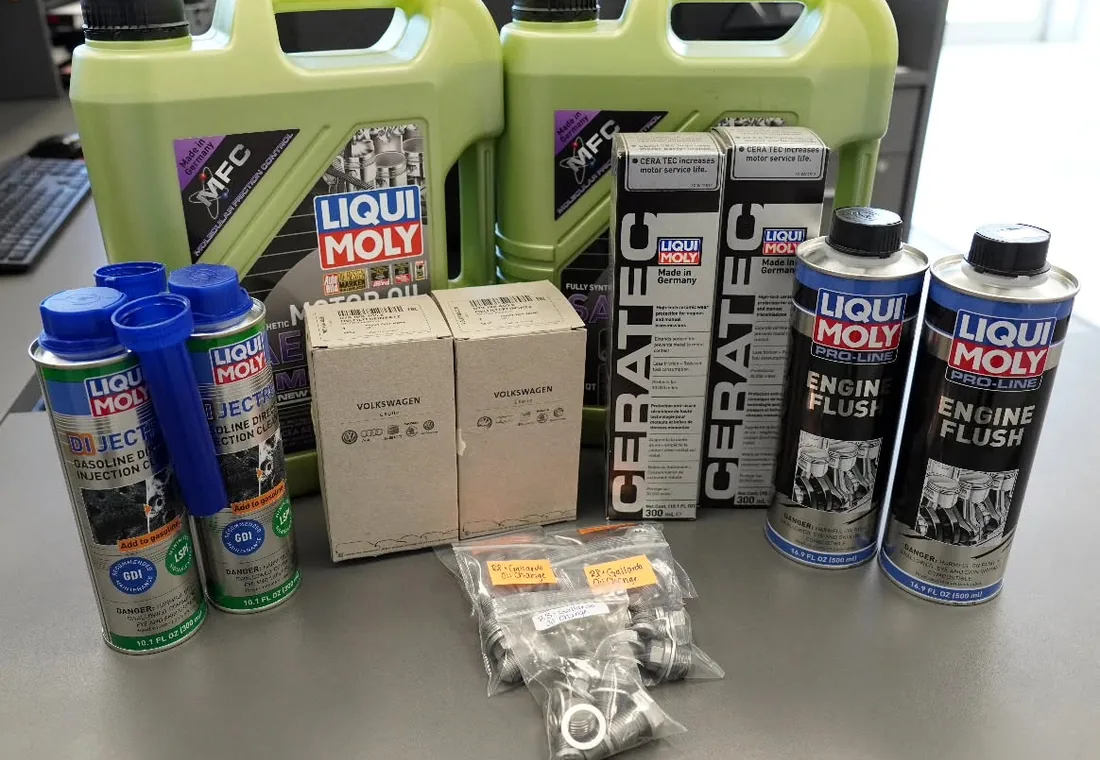
Oil leak repair often overlaps with oil service, filter quality, crankcase ventilation checks, and nearby wear items. Where appropriate, Vollux uses Liqui Moly oils and factory/dealer or OE/OEM-quality filters rather than treating the job like a cheap generic oil service.